How becoming a doula changed how I see systems
- Kat Allen
- May 7
- 3 min read

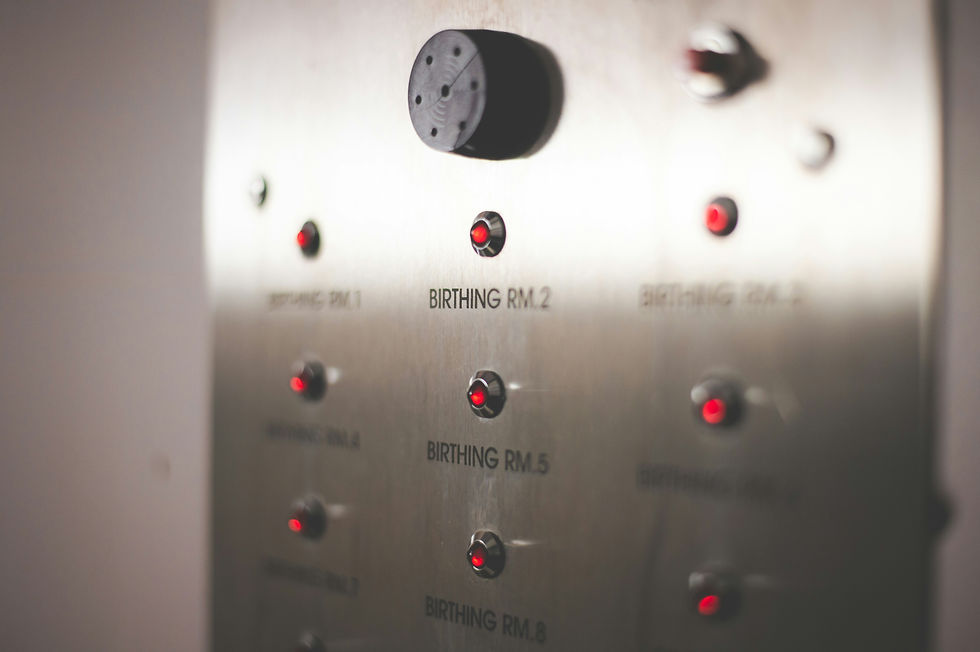
Before I became a doula, I thought systems were clunky but mostly well-intentioned. Overworked, underfunded, imperfect—but still designed to help. I believed that if you followed the rules, asked the right questions, stayed polite and persistent, the system would eventually work the way it was supposed to.
Becoming a doula stripped that belief down to the studs.
Sitting beside families during some of the most vulnerable moments of their lives showed me that systems aren’t neutral. They’re shaped by power, history, bias, liability, and convenience. And while they can support people beautifully, they can also flatten them, silence them, and cause real harm—often without meaning to, and sometimes without noticing at all.
What changed first was how clearly I could see who the system is built for—and who has to fight to fit inside it.
I watched confident, educated parents still struggle to be heard. I watched parents of color, disabled parents, queer parents, young parents, and parents with trauma histories be questioned, dismissed, or labeled difficult for advocating for themselves. I saw how quickly care shifted based on how someone spoke, what insurance they had, how calm they could remain under pressure.
I used to think “advocacy” meant speaking up loudly. Now I know it often means translating. Helping a parent turn a gut feeling into language that won’t be brushed off. Helping them ask a question in a way that keeps them safe inside a hierarchy that doesn’t always welcome dissent.
Training didn’t prepare me for this part.
No certification explained how to sit with a family when the system technically followed protocol but still caused harm. No textbook covered how to support someone when every option in front of them feels like a loss. No class taught how to hold anger and grief without turning it inward or exploding outward.
Becoming a doula taught me that systems love efficiency, but birth and postpartum are not efficient. They are messy, nonlinear, emotional, and deeply human. When systems prioritize speed, documentation, and risk management over relationship, parents feel it immediately—even if they can’t name it yet.
I also learned how much responsibility gets quietly shifted onto parents.
Parents are expected to know their rights without being taught them. To give informed consent while under stress, pain, or medication. To recover on timelines that have more to do with insurance than biology. To trust providers who may rotate every twelve hours while being told they’re the “decision-makers.”
That’s not empowerment. That’s abandonment dressed up as choice.
As a doula, I don’t sit outside the system pretending it doesn’t exist. I sit at the edges of it, helping families navigate it with their dignity intact. Sometimes that means slowing things down. Sometimes it means helping a parent say, “I need more information.” Sometimes it means quietly validating, “It makes sense that this feels wrong.”
And sometimes it means witnessing the limits of what I can change.
That part is hard. Becoming a doula didn’t make me believe less in care—it made me believe more deeply in human care. In presence. In listening. In honoring lived experience as real expertise.
It also made me deeply wary of systems that resist feedback, discourage questions, or frame compliance as safety. Any system that requires people to disconnect from their instincts to survive inside it is not functioning as care—it’s functioning as control.
The biggest shift for me is this: I no longer assume harm is rare.
I assume vulnerability is constant. I assume trust must be earned over and over. I assume families deserve transparency, patience, and respect—not just when things go smoothly, but especially when they don’t.
Becoming a doula didn’t make me anti-system. It made me honest about them.
And it made me fiercely committed to standing with families as whole people inside systems that often only see parts of them.


Comments